SEO vs GEO: How Should Business Prepare for AI Search in 2026?


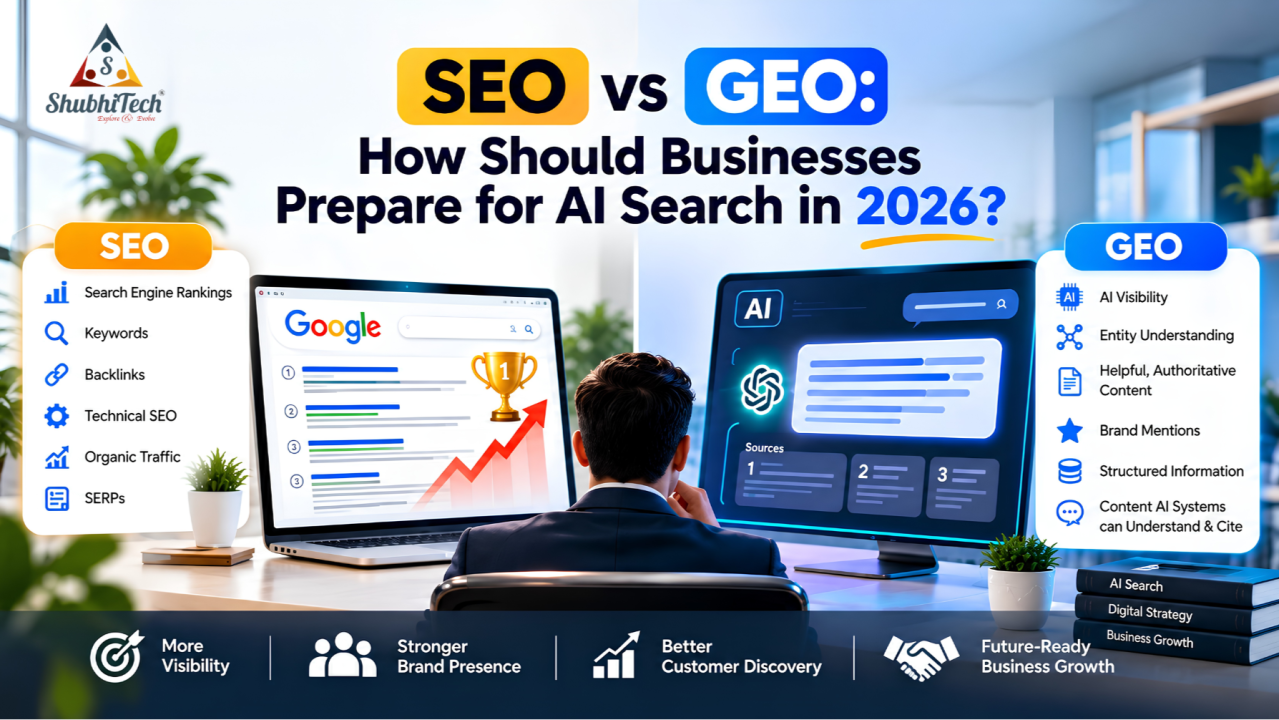
SEO vs GEO: How Should Business Prepare for AI Search in 2026?
Search Is Changing. Is Your Business Ready?
Not long ago, the customer journey was simple: type a query into Google, scan a list of blue
links, click the one that looked most relevant, and browse the website yourself.
Today, that journey is being rewritten. A growing number of customers now ask ChatGPT, Claude,
Google's AI Overviews, or another AI tool — and receive a complete, synthesized answer in
seconds. No scrolling. No comparing five tabs. Often, no website visit at all.
For businesses, this isn't a minor shift in user behavior — it's a fundamental change in how
visibility works. You're no longer optimizing for a single ranking algorithm. You're optimizing
for two very different systems that "read" your business in different ways.
SEO vs. GEO: What's the Difference?
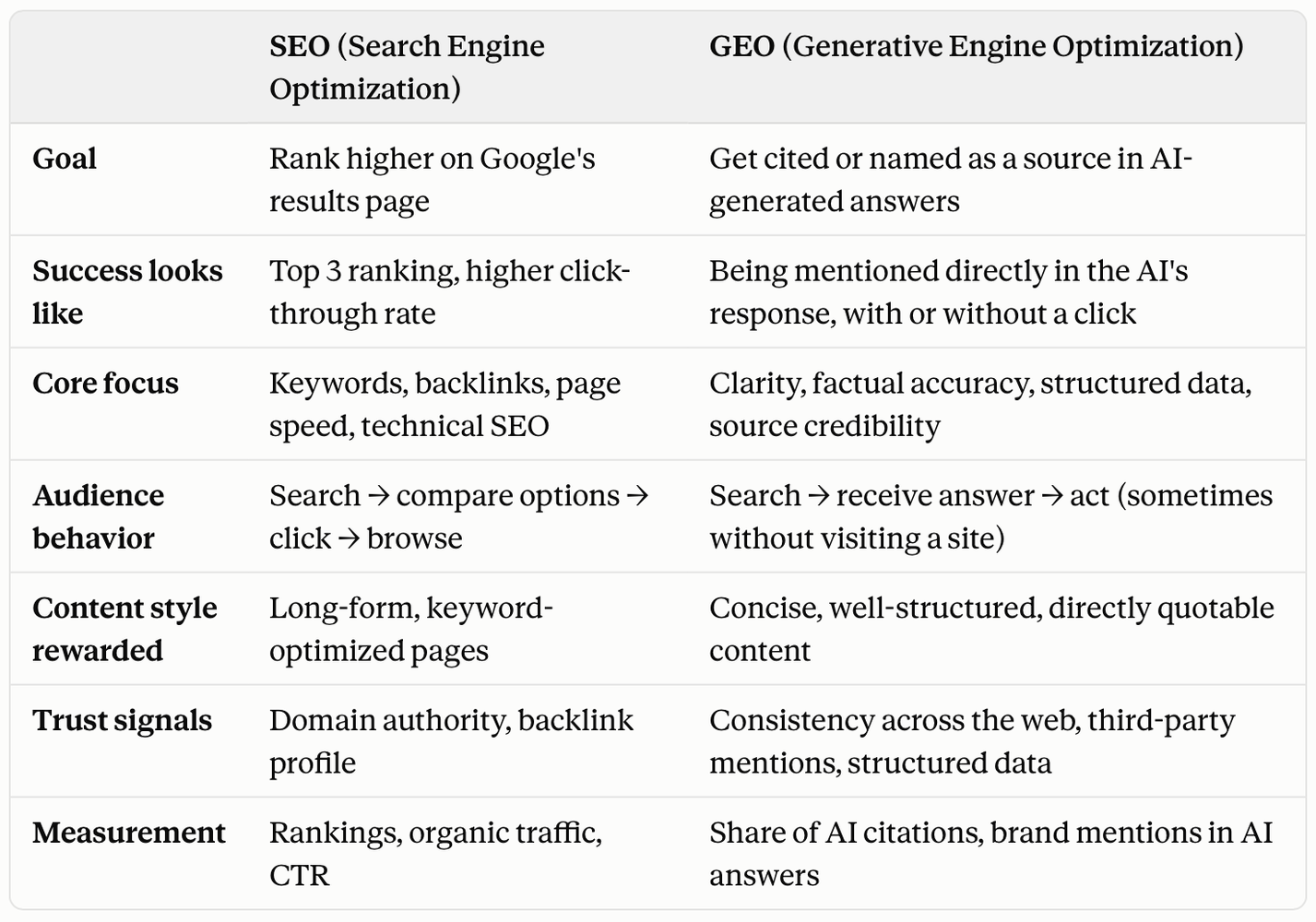
Is SEO dead? Absolutely not. In fact, most GEO best practices are built directly on top of strong SEO fundamentals. AI tools still rely heavily on well-indexed, authoritative, structured web content to generate their answers. Think of it this way: SEO gets you discovered by search engines. GEO gets you selected by AI as the answer. The two now work as one connected system rather than separate strategies.
Why This Shift Is Happening
A few forces are driving this change simultaneously:
- Zero-click behaviour is rising. Users increasingly want the answer, not the research process.
- AI tools are becoming default entry points. For many people, especially younger demographics, ChatGPT-style tools are replacing the "open a new tab and Google it" habit.
- Search engines themselves are adapting. Google's AI Overviews already sit above traditional results for many queries, meaning even Google search is becoming more "AI-answer-first."
- Voice and conversational search are growing. People ask AI tools questions the way they'd ask a knowledgeable friend — in full sentences, with context — which favors content written in a natural, direct, question-answering format.
Illustrating the Shift
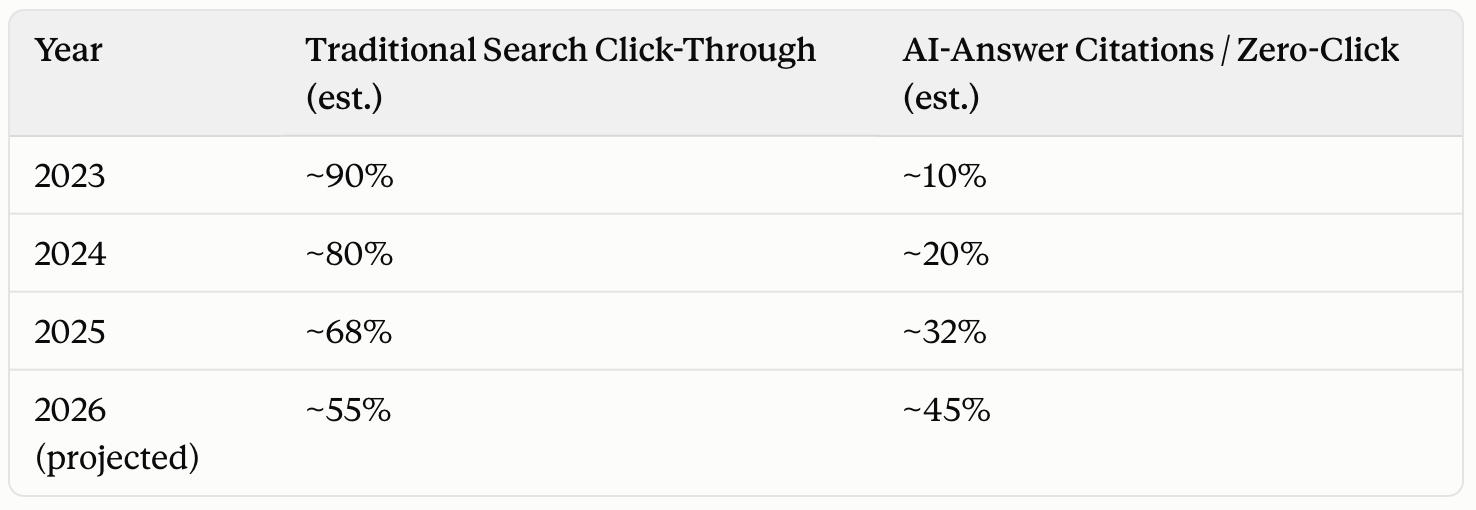
(Directional estimate for illustration purposes — not based on a specific published dataset)
The exact numbers vary by industry and query type, but the direction is consistent across nearly every credible study on AI search adoption: more answers, fewer clicks, and higher stakes for being the source the AI trusts enough to name.
7 Ways to Prepare Now — In More Detail
- Keep your SEO foundation strong A fast, secure, mobile-friendly website is still non-negotiable. AI crawlers and search engines both need to access, load, and parse your site efficiently. Poor site health limits your visibility in both worlds — not just one.
- Answer your customers' real questions in clear, simple language Think about the actual questions your customers type or speak — "How much does X cost?", "What's the best way to do Y?" — and answer them directly, near the top of your content. AI tools favor content that resolves a question quickly, without requiring the reader (or the model) to dig.
- Show expertise with author names, real examples, and accurate facts E-E-A-T (Experience, Expertise, Authoritativeness, Trustworthiness) matters more than ever. Attach real names and credentials to your content. Use specific, verifiable examples rather than vague claims. AI systems are increasingly designed to favor content that demonstrates genuine, first-hand expertise over generic marketing copy.
- Build brand mentions on trusted sites, directories, and news outlets AI tools cross-reference multiple sources to build confidence in an answer. The more consistently your brand is mentioned — in press coverage, industry directories, review platforms, and partner sites — the more "citable" you become in the eyes of these systems.
- Add structured data (schema markup) Schema markup essentially translates your content into a language machines can read directly — product details, FAQs, reviews, business information. This isn't optional anymore; it's one of the clearest ways to help AI systems understand exactly what your page is about.
- Keep your business name, address, and service details consistent everywhere Inconsistent NAP (Name, Address, Phone) data across your website, Google Business Profile, directories, and social platforms creates confusion for both search engines and AI models. Consistency builds the kind of trust that gets you cited.
- Write for citation: short paragraphs, direct answers, FAQs, and lists AI models tend to pull cleanly structured content — bullet points, FAQs, short paragraphs with clear topic sentences. If your content is a wall of dense text, it's harder to extract and cite. Structure your content the way you'd want it quoted.
What customers want hasn't changed: quick, helpful, trusted answers. What has changed is where they go to find them — and who (or what) decides which businesses get named in that answer.
Businesses that prepare now will be the ones AI recommends later. The companies that treat this
as optional today are the ones that will be invisible in AI answers tomorrow — while their
competitors take that space.
At ShubhiTech Pvt
Ltd, we help businesses navigate this shift and build visibility for both traditional
search and AI-generated answers. If you want to know exactly where your brand stands today — and
what it would take to show up in AI search tomorrow — let's talk.